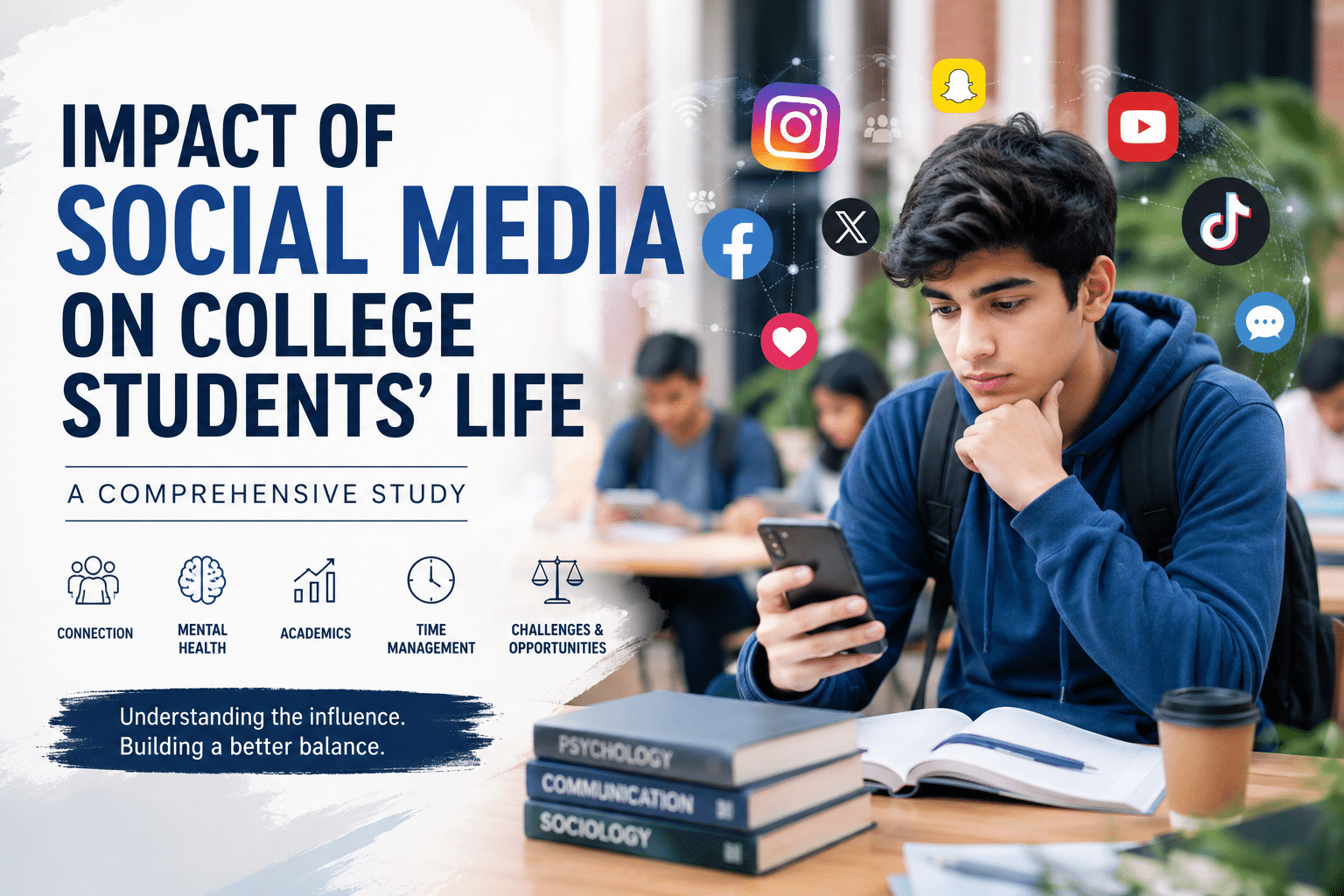
The twenty-first century is often described as the era of information and technology. Among the
many technological advancements, social media has emerged as one of the strongest tools
influencing human life. Social media generally means internet-based platforms through which
people can exchange ideas, share pictures, videos, opinions, knowledge and personal experiences
instantly with others across the world.
College students are the most active users of social networking sites because they belong to a
generation that is deeply attached to smartphones and digital communication. From morning till
night, many students remain engaged in checking messages, uploading status, watching reels,
commenting on posts or following online trends. Social media has therefore become not merely a
medium of communication, but a lifestyle.
Undoubtedly, these platforms provide access to educational materials, online lectures, career
news, scholarship updates and global awareness. At the same time, excessive dependence on
virtual networking has reduced students’ attention toward books, classroom discussions and real
social interaction. Therefore, understanding its impact on students’ academic, social and
psychological life has become highly necessary.
MEANING AND CONCEPT OF SOCIAL MEDIA
Social media refers to various online applications and websites that allow users to create, share
and exchange information with others. It includes communication through text, audio, video,
images and live interaction. Unlike traditional media such as newspapers or television, social
media provides immediate participation from users.
Popular social media services used by students include:
WhatsApp
Facebook
Instagram
YouTube
Telegram
X (Twitter)
Snapchat
LinkedIn
Google Meet / Zoom discussion groups
These platforms are used for both personal entertainment and educational purposes.
POSITIVE IMPACT OF SOCIAL MEDIA ON COLLEGE STUDENTS
- Educational Assistance
Students can easily access online classes, tutorial videos, digital libraries, e-books, research
articles and academic discussions through social media. Educational channels on YouTube and
Telegram groups help in competitive exam preparation. - Fast Communication
Social media has made communication between students, teachers and institutions very easy.
Important notices, assignments, exam schedules and class information can be circulated instantly. - Awareness and Knowledge
Through social networking sites students remain informed about national and international
affairs, social issues, legal developments, scientific inventions and career opportunities. - Career Development
LinkedIn and professional groups provide internship opportunities, job information, networking
with experts and personality-building guidance. - Creativity and Self-Expression
Students can showcase talents such as writing, singing, art, photography, debate and public
speaking through online platforms, which helps in confidence building.
NEGATIVE IMPACT OF SOCIAL MEDIA ON COLLEGE STUDENTS - Waste of Valuable Time
One of the greatest harms of social media is that students often spend many unnecessary hours
watching reels, memes and chatting. This reduces study time and discipline. - Decline in Academic Performance
Continuous notifications and addiction to mobile phones disturb concentration. Students become
less interested in reading textbooks and attending lectures. - Mental Stress and Anxiety
Comparing one’s life with the glamorous online life of others creates inferiority complex,
loneliness, depression and emotional frustration. - Disturbed Sleep and Health
Late-night social media browsing affects sleeping patterns, eyesight and physical health. Lack of
exercise and prolonged screen time also create fatigue. - Cyber Risks
Students may become victims of fake news, cyber bullying, online fraud, privacy leakage and
harmful digital relationships. - Weakening of Real Relationships
Excessive online communication decreases direct conversation with family members and friends,
leading to emotional distance.
SOCIAL MEDIA AS A TOOL OF ADDICTION
Social media is designed in such a way that users feel compelled to check updates repeatedly.
Likes, comments, followers and notifications create psychological dependency. Many students
unconsciously open their phones every few minutes, even during class hours. This habit slowly
turns into digital addiction, making them restless when they stay offline.
Such dependency weakens memory, decreases patience and affects disciplined study habits.
SUGGESTIONS FOR PROPER USE OF SOCIAL MEDIA
To gain benefits and avoid harmful consequences, students should maintain controlled use of
social media. Some important suggestions are:
Fix a limited daily screen time.
Use educational channels more frequently.
Keep mobile phones away during study hours.
Avoid unnecessary late-night browsing.
Verify online information before believing or sharing.
Engage more in outdoor activities and real conversations.
Use social media as a learning tool, not as a full-time entertainment source.
Social media has become an inseparable part of modern student life. It has transformed the
traditional methods of communication, education and social interaction. On one side, it offers
unlimited knowledge, global connection and career opportunities; on the other side, it causes
distraction, addiction and academic decline when used irresponsibly.
Therefore, social media itself is neither entirely beneficial nor completely harmful—the result
depends on the manner in which students use it. If college students apply self-control and make
educational use of digital platforms, social media can become a ladder of success. But if they
surrender to endless entertainment and virtual dependency, it can seriously damage their future.
DR RAFIUL AHMED